
Discover how RFID self-checkout can create a smoother shopping experience for Sri Lankan fashion retailers, with connected inventory, warehouse and replenishment benefits.
Continue readingDiscover how RFID self-checkout can create a smoother shopping experience for Sri Lankan fashion retailers, with connected inventory, warehouse and replenishment benefits.
Continue reading
For an equipment-rental business, every item must be available at the right location, in the right condition, at the right time.
But when hundreds or thousands of items move between customers, branches, event locations, warehouses, and service centres, control can quickly break down.
A generator may appear available while it is still at a customer location. A camera may be returned but waiting to be charged. Catering equipment may require cleaning or cooling before its next rental. A machine may need maintenance before it can safely be issued again.
When this information is managed through spreadsheets, calls, messages, or staff memory, the result can be:
For high-value items, even one missing asset or failed reservation can cause a serious financial and reputational loss.
A returned item may not be ready for the next customer.
It could be:
Without real-time visibility, staff may confirm a booking based on incomplete information.
This creates last-minute cancellations, rushed substitutions, dissatisfied customers, and operational confusion.
OCTO Ops Asset Management gives each rental item a unique digital record using QR codes, barcodes, RFID, NFC, or GPS, depending on the value and movement of the asset.
The system can help rental companies:
Instead of depending on staff to remember where an item is, management gains a clear view of what is available, what is unavailable, why it is unavailable, and when it can be rented again.
For rental companies, poor asset visibility does not only create operational inconvenience.
It directly affects revenue.
An item that cannot be located cannot be rented. An item that is double-booked can damage customer confidence. Equipment issued without proper maintenance or inspection can create safety, liability, and reputational risks.
If your team cannot immediately confirm the location, condition, availability, and responsibility of every rental item, your business is exposed to preventable losses.
OCTO Ops helps rental businesses manage every asset from reservation to return—across multiple locations, customers, and teams.
Speak to Flatorb about improving your rental asset control and booking process.
Call: +94 77 512 0838
For detailed features, visit the Flatorb Asset Management System page.

You spend years building a household name. You pour millions into marketing budgets, fine-tune your messaging, and work tirelessly to earn consumer trust.
Then, it happens overnight.
A single batch of expired pharmaceuticals, a spoiled food item, or a lapsed FMCG product slips onto a retail shelf. Suddenly, your brand is trending on social media for all the wrong reasons. Worse yet, your company is facing severe regulatory backlash, heavy fines, and a public relations nightmare with local authorities.
In industries like Pharmaceuticals, Food & Beverage, and FMCG, product age and compliance controls are completely non-negotiable. Yet, in the recent past, we have seen numerous companies suffer massive, preventable hits to their reputation due to non-compliance.
It is a daunting reality for business owners, and it raises a critical question: If you’ve invested so heavily in your business, why are these blind spots still happening?
The harsh truth? Traditional accounting software tracks transactions, not movements. Your system records the invoice, but it cannot tell you which batch is about to expire at the back of shelf number four right now.
Across many corporates in Sri Lanka, leadership teams sit in boardrooms reviewing clean, balanced financial reports and assume the business is under control — while expiry risks, compliance gaps, and silent operational failures continue to build up unnoticed on the ground.
You do not need to replace your entire financial stack or invest in an expensive, multi-million rupee international system. You simply need an automated, ground-floor execution layer that captures the physical truth of your inventory.
Developed natively by Flatorb to address local supply chain infrastructure and labor dynamics, OCTO Ops is a modular tracking platform that plugs directly into your existing software via a secure REST API.
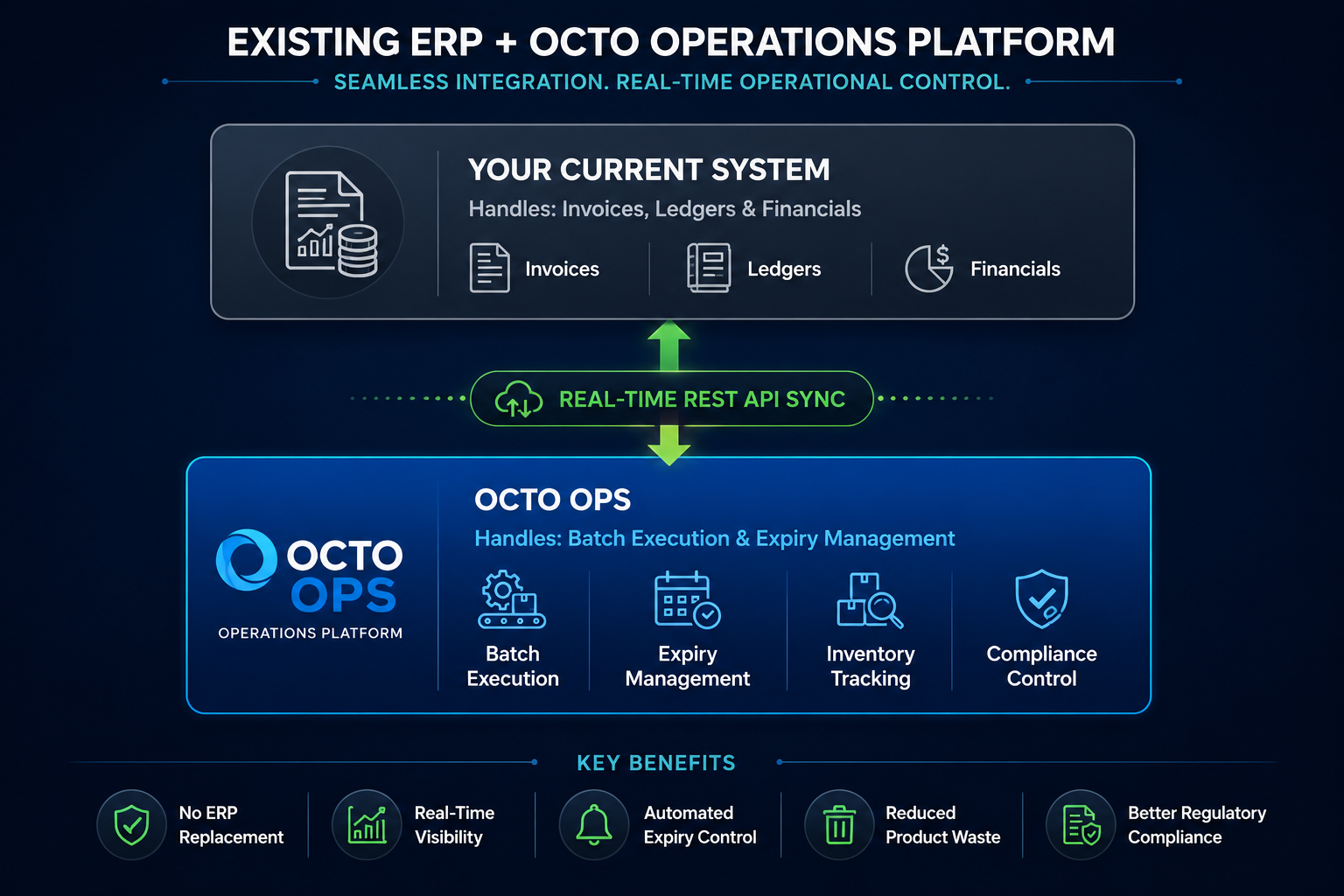
Here is how OCTO Ops serves as the bulletproof backbone for your compliance and quality control:
You can hardcode your exact operational rules directly into the system. Whether your inventory demands First-Expired, First-Out (FEFO), FIFO, or LIFO, OCTO Ops automates the process. Floor staff are guided dynamically via scanning hardware—meaning they cannot mistakenly dispatch the wrong batch.
Stop the finger-pointing. OCTO Ops tracks the true responsibility of your floor operations. You will know exactly who picked a batch, what time it was moved, and where it went , creating a flawless digital audit trail for local authorities.
Instead of relying on a supervisor to manually check a clipboard , OCTO Ops uses automated hardware data capture (RFID/Barcodes/AI) to track batch numbers and manufacturing dates. The system triggers proactive alerts weeks or months before a product expires, allowing you to liquidate or recall stock safely.
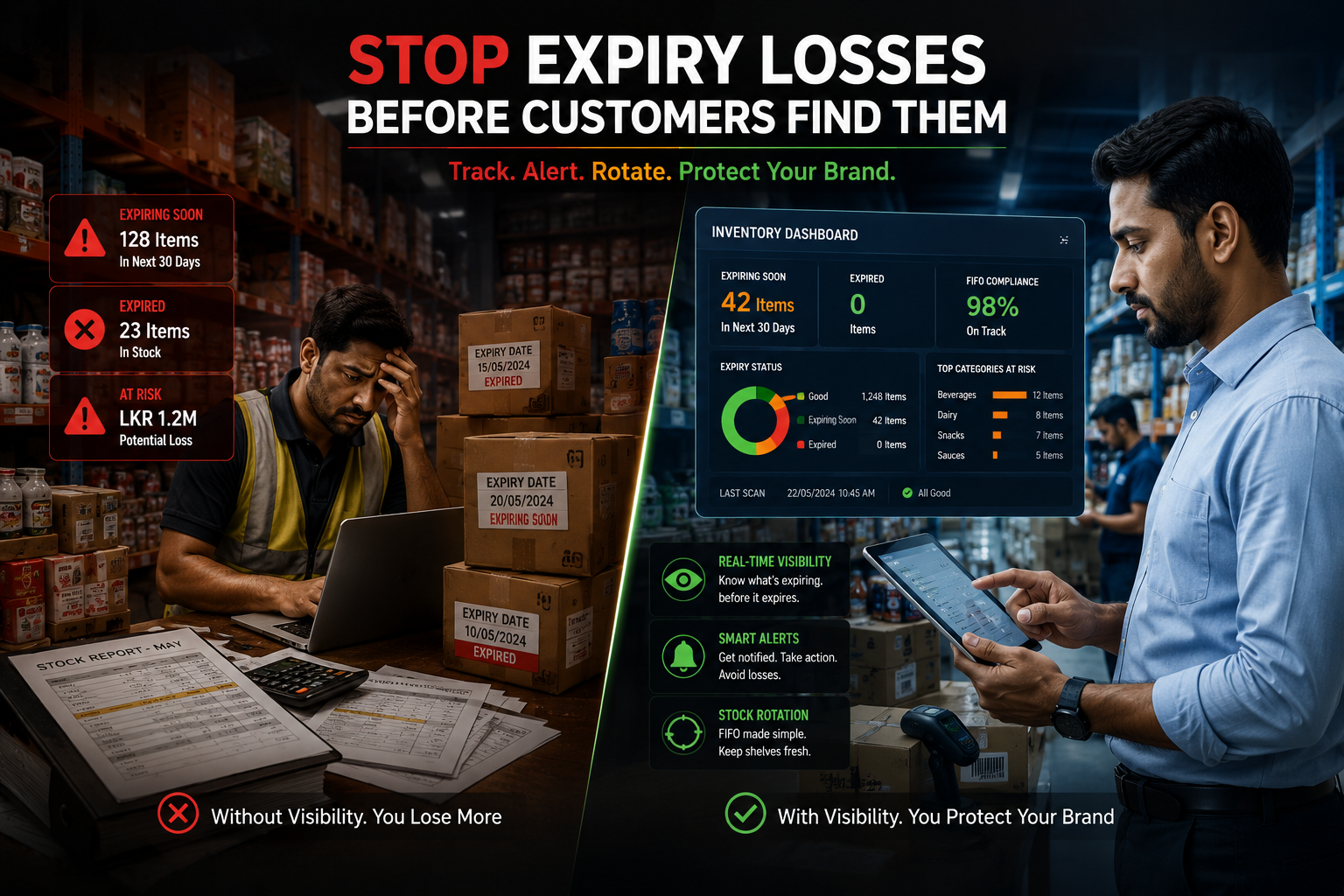
Missing strict health and safety regulatory guidelines set by local authorities can lead to immediate inventory seizures or license suspensions.
A complete lack of digital lineage makes it impossible to track who handled, transferred, or approved a compromised batch.
Floor workers manually grab the closest, most accessible pallet instead of prioritizing the oldest, nearest-to-expiry stock.
True brand protection and profitability do not happen on a passive financial spreadsheet; they happen on the warehouse floor by eliminating daily bottlenecks. Keep your accounting software intact, but give your business the real-time operational brain it needs to safeguard its reputation.
Don’t wait for a compliance crisis to tarnish what you have built.